Venous Thrombosis
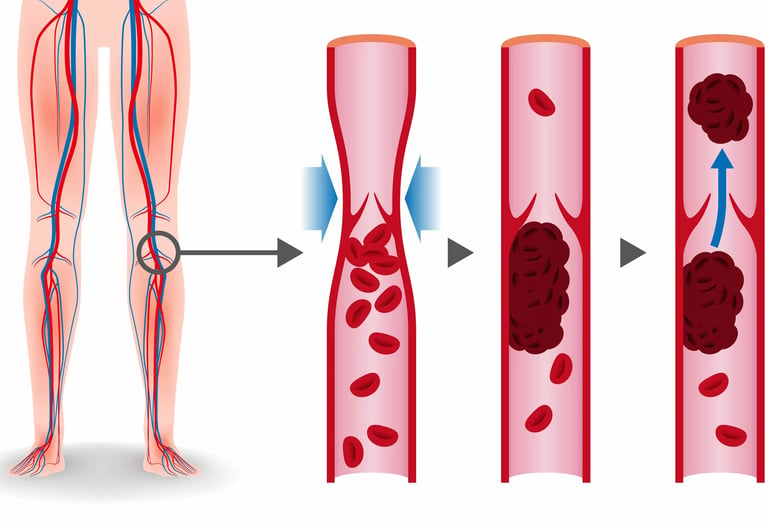
Venous thrombosis occurs when a blood clot forms in a vein and interferes with blood flow. It often affects the legs and can cause serious complications.
Risk factors may include prolonged immobility, surgery, pregnancy, obesity, cancer and inherited clotting conditions. Symptoms can include swelling, pain, redness and tenderness, although some clots cause few or no symptoms. A clot can lead to a pulmonary embolism, which can be life-threatening.
Assessment may include Doppler ultrasound or other imaging to confirm the diagnosis and guide treatment.
Treatment and prevention
Treatment depends on the location and severity of the clot and the patient’s overall health. Anticoagulant medication may be prescribed to reduce further clotting and the risk of complications. Compression and procedures to remove or dissolve a clot may be considered in selected cases.
Prevention is tailored to individual risk factors and may involve staying active, avoiding prolonged immobility and following medical advice about compression or medication. Seek medical attention promptly for symptoms that suggest venous thrombosis, particularly after surgery or a period of immobility.



Dr. Antonio Suárez Cabrera, Vascular Specialist and Vascular Surgeon
Our Clinic
Pabellón Caribe, Suite 203
Av. Nichupté 22, SM 19 MZ 2, 77505 Cancún, Mexico
Contact Us